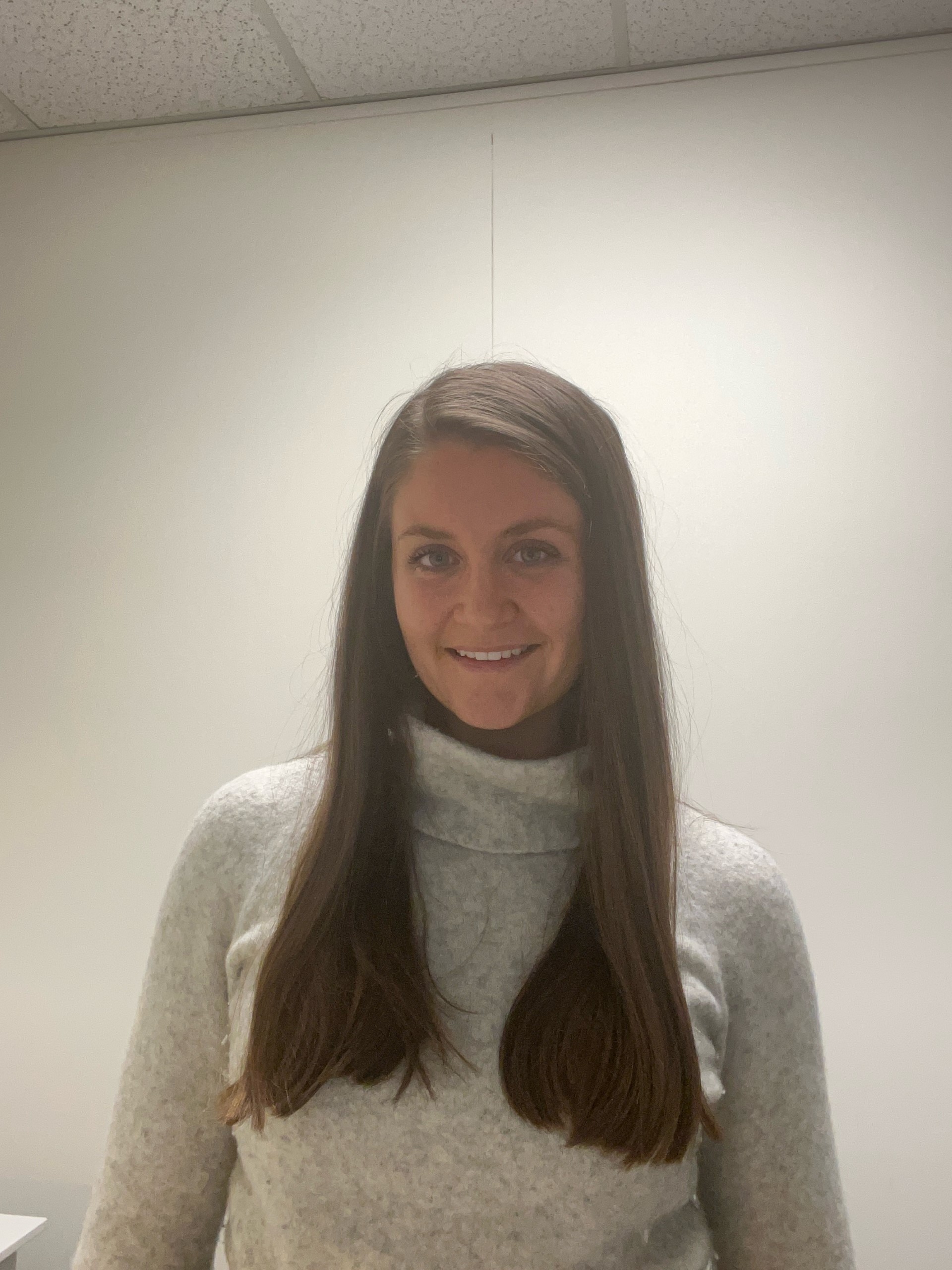
Khaleel Pardhan
JA Summer Camp, Company Program 2022–2026
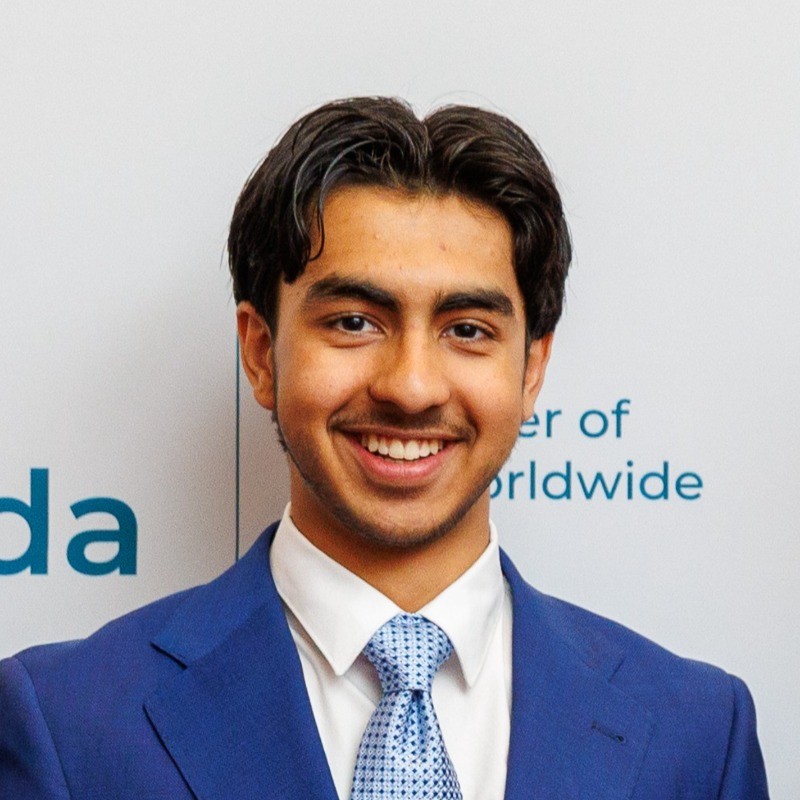
About Khaleel
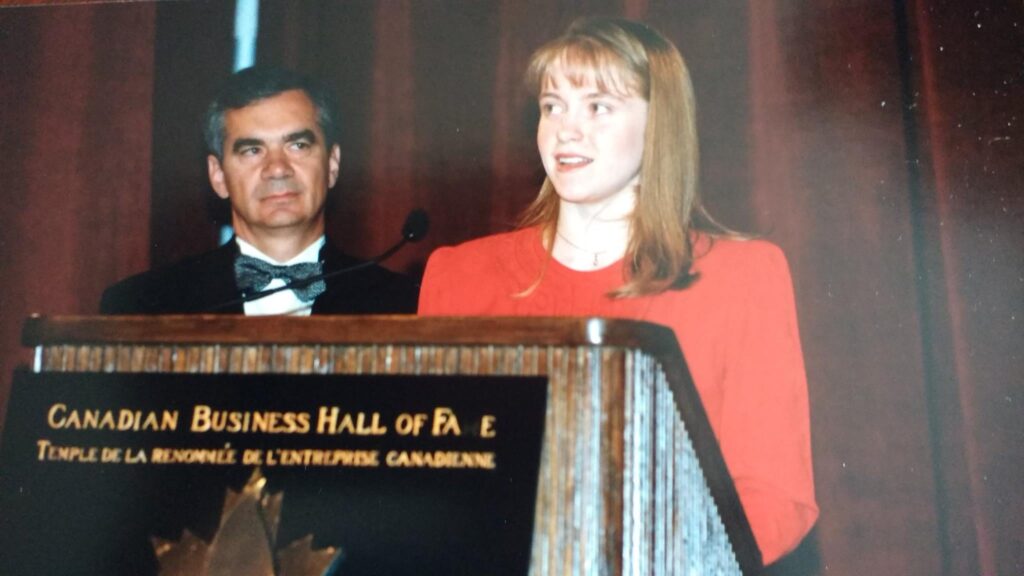
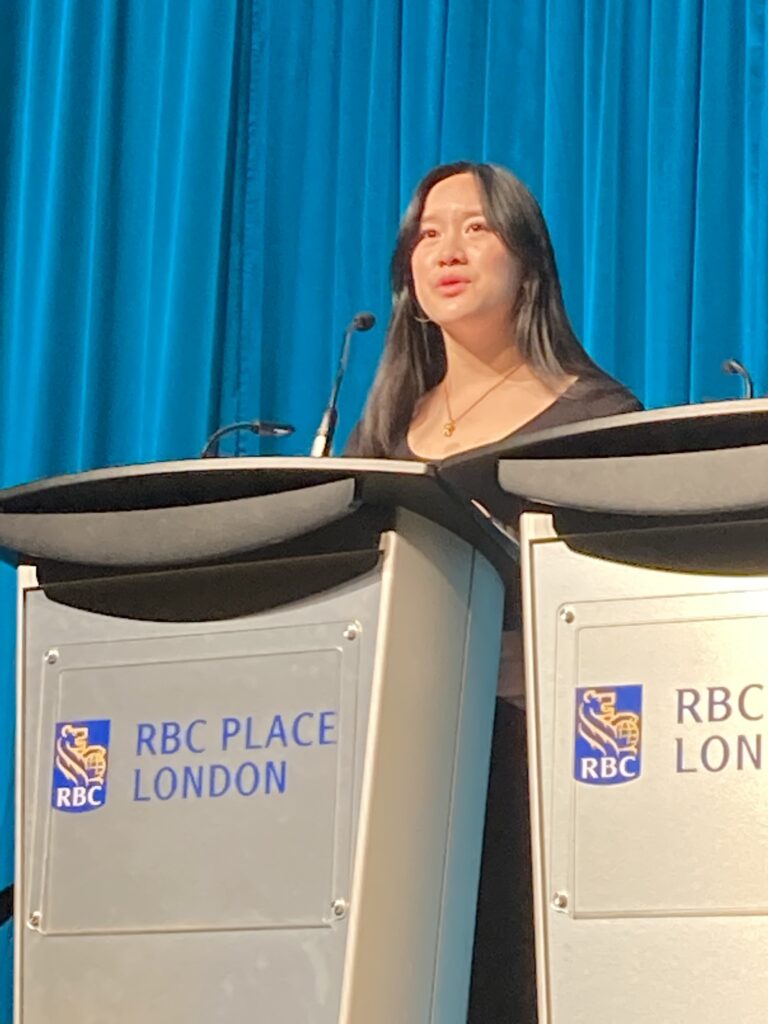
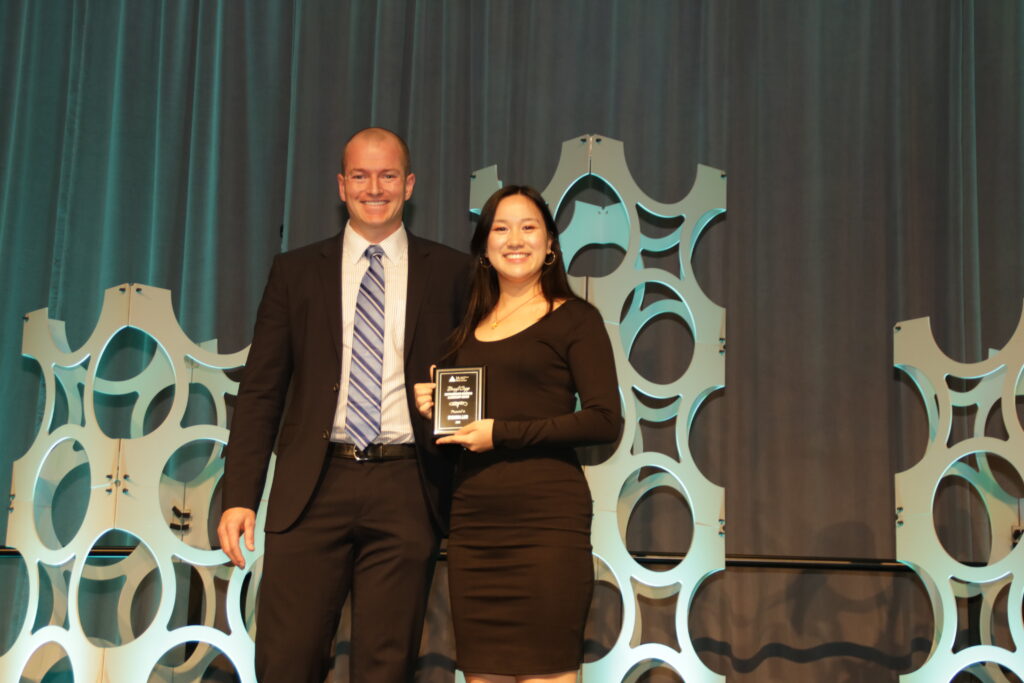
Khaleel attended JA Summer Camp in Grades 5 and 6, then was a Company Program Participant for four years: 2022–2023, 2023–2024, 2024–2025, and 2025–2026. He also attended the London and District Business Hall of Fame Gala and the Canadian Business Hall of Fame gala as a JA Representative.
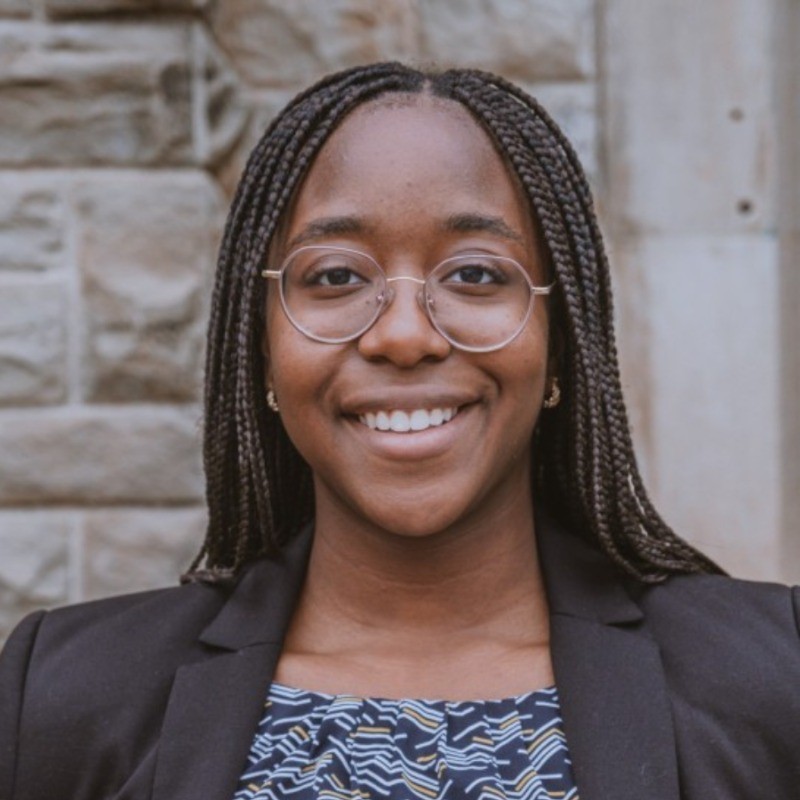
Khaleel is an Insurance Agent at Desjardins Insurance, Richard Ten Haaf Insurance, in London, Ontario and is currently enrolled in the BMOS program at Huron University, with an Ivey Advanced Entry Opportunity, working toward his HBA at Ivey.
Khaleel’s JA Experience
My first JA experience was the summer camp in Grades 5 and 6. It was one of my favourite camps as a kid, and looking back it was a whole business in a week. I came up with a product, designed a logo, bought the materials, made the thing, and then sold it with real money to real people at a farmers market. The next day we sat down with the counsellors and worked out revenue, costs, expenses, and profit. I was in Grade 5 and I understood all of it, which says a lot about how the program is built. A JA staff member came to my school in Grade 9 to talk about the Company Program. I was the type to say yes to every opportunity that showed up, so I signed up on the spot. Walking in that first night, I had no idea what I was doing. Outside of the intro business class I had just started, I had never touched business at all. I knew a couple of people from my school and the rest of the room was strangers.
Grade 9, Car-Go-Clean, VP of Production. I knew nothing about production when I got the title. I learned what a production process actually is, how to use Excel and Google Sheets to track output, and what quality control means and why consistency matters that much. I spent that year figuring out how to make our process more efficient. What I really learned was that what you put in is what you get out. I put in more than I had to as a Grade 9, and the program gave it back.”
Grade 10, SCAN Apparel, VP of Sales. This was the hard year, and I would not trade it. Our product was not a good product. We had internal disputes. People stopped showing up. We barely sold anything all year. We still marketed it, still ran the numbers, still did the work, and it still did not come together. That year taught me more than any of the successful ones. Seeing what does not work, what happens when a team stops communicating, what happens when nobody takes ownership, is knowledge you cannot get from a year that goes well. When I became President later, I knew what not to do because of Grade 10.
Grade 11 and 12, Bagnetic and ActiveAid, President. Bagnetic made a magnetic bag. ActiveAid made an athletic first aid kit. By then I had been through the full cycle enough times to understand every department, and my job changed from doing the work to helping other people do it. Sitting with a VP of HR who had never been in a company and helping her figure out what her department was even for. Walking a Grade 9 VP of Technology through writing his first social media and acceptable use policies, showing him examples and then letting him build it himself. What my mentors gave me in Grade 9, I was handing to the next group. Some of them will be presidents in a couple of years, and that is how the thing keeps going.
There is one other memory I come back to. In Grade 12 my company was on Wednesday nights, but production was our bottleneck and we were burning full three-hour meetings just making product. So a few of us started coming in on Monday nights to produce, which freed our actual sessions for pitching, selling, branding, and outreach. What I did not expect was everything else those nights gave me. I got to talk to mentors from other groups, and to current Ivey students and Ivey alumni, right when I was working on my own application. Conversations about why Ivey, what to put in an application, what university actually offers. I ended up getting into Ivey AEO, and some of that traces straight back to nights I was only there to build product.
How do you attribute your JA experience to your success?
JA gave me the skills to succeed in all aspects of life, not just business. Three things changed in me between Grade 9 and Grade 12. I learned how to work with people, particularly how to delegate and actually trust a team. I learned how to communicate, with peers, with adults, and in rooms where I was the youngest person by twenty years. And I learned to take initiative, which sounds simple and is not. Plenty of people have good ideas. Very few act on them. JA is where I learned to be someone who acts, and where I learned how to help other people get there too.
The mentors are the reason any of it worked. My mentor in Grade 11 and 12, Omar Hamid, is a JA OG. He did the Company Program for four years himself and has been mentoring for over twenty years, and he has mentored several of my other mentors, which is wild to think about. He taught me how to work with each of my VPs individually, understand what they were trying to accomplish in their department and personally, and pull six separate visions into one direction for the company. He taught me how to approach someone who has ideas but is not moving on them. He taught me about business, money, and life. None of these people were paid to be there. Four companies, four different sets of mentors, and every one of them showed up on a weeknight because they wanted a room of teenagers to figure it out. When you get that consistently for four years it changes what you think you owe other people. Almost everything I have built since, the DECA chapter, the case competition, Camp Noor, comes from wanting to give someone else a version of what JA gave me.
The most concrete example of what JA opened up is my current job. Katie Ten Haaf was one of my mentors in Grade 11 when I was President. She watched me run the company for a full year, how I worked with my VPs, how I communicated, how I solved problems, how I pitched our product, and how I handled myself with adults who had decades more experience than me. The next year she reached out and told me she had an opportunity. Her father owns a Desjardins Insurance branch and she was hiring for a licensed insurance agent position. She showed me the posting and told me she had not put it up yet, that she was planning to advertise at Western and Fanshawe, but she wanted to offer it to me first. I interviewed with her dad and it became a real job. I got my licence and I am working in insurance before I have started my first year of university. That is what people miss about JA. The connections open doors you would not expect. In today’s job market, knowing people is often the only way to get in early, and the fact that a mentor from a volunteer program handed me a career head start out of high school says everything about what this organization actually is. The people my age were the other half of it. I met students I would never have crossed paths with otherwise, from schools all over the region. Not average high schoolers either. Driven people at the top of what they do, the ones getting the best grades, the ones your parents want you around. Iron sharpens iron, and JA is where I actually saw that happen. And it keeps showing up. In the connections I have, in who I reach out to when I need advice or an opportunity, in how I run a meeting. The impact goes well beyond what you would guess walking in for the first time.
Have you had any experience as an entrepreneur? Please share details about businesses you have created.
Nothing incorporated yet, but a lot of building things that did not exist before, and I trace that instinct directly to JA. I co-founded Camp Noor, a week-long summer camp at Al-Mahdi Islamic Community Centre. There had never been summer programming there despite clear demand, so I ran a parent interest form to size it up, built the registration and payment system, and handled parent communication myself. It ran with 15 campers the first year and 30 the second.
I also founded the Oakridge Strategy Summit, London’s first city-wide DECA-style case competition, so students at schools without business clubs could get the kind of experience I had been lucky enough to get. We had to postpone the first attempt two days out because registration was too low. That was a hard call and a useful one. We relaunched in January and ran it with over 50 competitors and seven post-secondary partners. Making that decision was much easier because Grade 10 had already taught me what it feels like when you push forward on something that is not ready.
Do you have any advice for students in high school right now? Anything you wish you knew when you were in school?
Say yes to the thing you are not ready for. I walked into Company Program in Grade 9 with no business background and no idea what I was doing, and being the least experienced person in the room turned out to be the fastest way to learn anything. Put in more than what is asked. What you get out of a program is almost exactly what you put in. In Grade 9 I was just a VP of Production, and I could have coasted. Choosing not to is why the next three years happened. Your worst year will teach you the most, but only if you actually look at it. Grade 10 was a failure by every measure. It is also the year I learned the most, because I paid attention to what went wrong instead of writing it off. And find the rooms where people are helping you for free. Those are the people who genuinely want you to succeed, and those relationships open doors years later in ways you cannot predict.